 Hannah Warren
CPD points inside an LMS
 Gary Peebles : May 5, 2023, 9:06:59 AM
Associations play a vital role in CPD points tracking and accreditation. An LMS can help associations build a framework for their members to easily...

Health professionals have to keep learning to keep practising. That makes continuing professional development (CPD), also known as continuing education (CE), one of the most valuable things a health professional association can offer. Online CPD for health professionals works best when it is short, easy to find and simple to record.
The short answer: Health professional associations get the most from online CPD by turning existing webinars into short, on demand modules, tracking CPD hours automatically and making courses easy to finish on a phone. Offered free or discounted to members and at full price to others, online CPD becomes both a reason to renew and a source of non-dues revenue.
Key takeaways
In Australia, there were 959,858 registered health practitioners at the end of June 2025, according to the Australian Health Practitioner Regulation Agency (Ahpra). Under national law, all registered health practitioners must undertake CPD. Each profession's board sets its own minimum.
Those minimums add up. Dental practitioners, for example, need at least 60 hours of CPD over each three year cycle. Regulators in New Zealand, Canada and the US set similar rules for the professions they oversee.
So your members will do CPD somewhere. The real question is whether they do it with you, or with a provider who has no stake in their profession.
Members also value CPD enough to pay for it. In a 2025 survey by association management firm Smithbucklin, 82% of association members said they seek continuing education. Sixty per cent said they would pay more for certifications and continuing education.
They want CPD that fits their week. Nurses, paramedics and allied health professionals often work shifts. A fixed Tuesday evening webinar will never suit all of them.
A study led by RCSI University of Medicine and Health Sciences found that health professionals prefer shorter CPD of one to three hours to be online. It lets them learn without losing time from work and family. Longer, hands on learning still suits in person events.
In practice, members look for four things:
Most associations already run webinars and conferences. The recordings often sit in a video library that few members revisit. Cut each one into short segments, add a quick knowledge check and a certificate, and you have CPD that members can complete on demand.
Manual CPD logs create work for everyone. When your learning management system (LMS) awards points or hours on completion, members get a record they can show an auditor. Your team also stops fielding requests to resend lost certificates. See how this works on our CPD software for associations page.
If a module only works well on a desktop, many clinicians will never finish it. Keep videos short, keep text easy to read on a small screen, and make quizzes simple to tap through.
Offer CPD free or discounted as a member benefit, and sell the same courses to non members at full price. That makes membership the obvious choice for regular learners and turns your content into income. Our non-dues revenue playbook covers pricing and packaging in more detail.
When your LMS connects to your association management system (AMS), completions flow into member records without double handling. That gives you clean data for board reporting, such as how many members earned CPD with you this year and which topics they chose.

Our content team spends much of its time turning association webinars into CPD courses. A few patterns come up again and again.
First, the best course rarely uses the whole recording. A 60 minute webinar usually holds three or four strong segments, and the audience questions are often the most useful part. Second, a short reflection question at the end of each module helps members connect the learning to their own practice.
Third, starting small works. A focused set of courses launched now, with more added each quarter, beats a full catalogue that is always six months away. Our education roadmap guide can help you decide what to build first.
In most cases, yes. Most boards accept a range of activity types, including online courses, as long as the learning is relevant to the practitioner's scope of practice and properly recorded. Check each board's registration standard for any limits or required activity types.
Aim for 10 to 20 minutes per module, grouped into courses of one to three hours. That matches what health professionals say they prefer online, and it makes progress easy to see.
Yes. You do not need a studio or an in house learning team. Start with content you already own, such as webinar recordings. Then decide whether to build courses yourself, build them with a partner, or have a partner build them for you.
Pick your three most watched webinars from the past year. For each one, note the profession it suits, the CPD category it could count towards, and the segments worth keeping. That short list is the start of your online CPD programme. When you are ready to see how it could work for your members, request a demo below.
 Gary Peebles : May 5, 2023, 9:06:59 AM
Associations play a vital role in CPD points tracking and accreditation. An LMS can help associations build a framework for their members to easily...

 AJ : Mar 25, 2025, 8:00:00 AM
How associations use online education and an LMS to earn non-dues revenue: selling courses and certifications, member pricing, repurposed webinars...
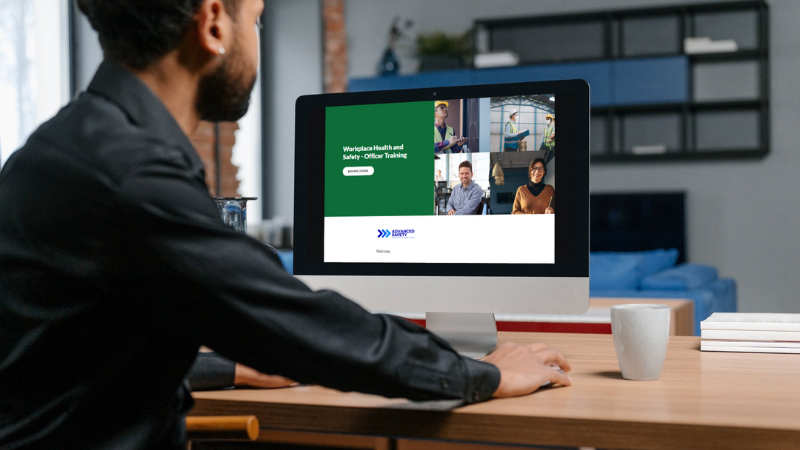
Advanced Safety have collaborated with Intuto to create interactive Workplace Health and Safety courses to comply with legislation in both NZ &...